Why Skill Based Education Is Becoming Important Today

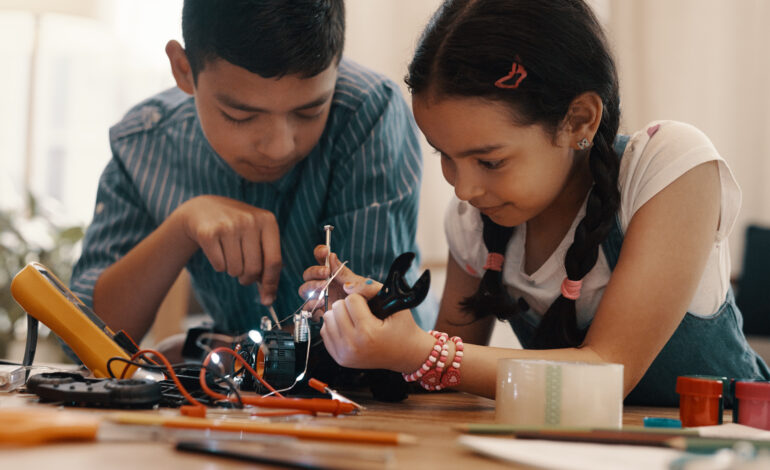
Education is not just about books and studying anymore. In this age, ability is considered more valuable than memory. And this has completely changed the nature of education and its delivery.
Skill-based education is one of the most crucial aspects of learning. Schools, colleges, and even online platforms are emphasizing practical knowledge and skills. This is done because the industries demand skills which can actually be used.
Understanding this early enough enables the students to prepare accordingly.
Here, you will discover the importance of skill-based education and its influence on learning.
Going Beyond Traditional Learning
Until recently, education was entirely theoretical. Students were required to study information and retain it so as to be able to reproduce it later during examinations.
While this form of learning contributed to knowledge, it did not necessarily involve the application of it. The learners were knowledgeable but had difficulties applying what they knew in practice.
Skill-based education is different in that learning happens through practice.
This form of education is much more powerful.
“Learning becomes powerful when it is applied.”
Fitting into Modern Career Expectations
There are many rapid changes happening in the job market today. Many old career types are changing while new ones are arising.
Industries are looking for individuals who can handle problem-solving and critical thinking, among other qualities.
Degrees have become less relevant. This is because skills are also valued by companies.
Therefore, skill-based education makes it easier to fit into the modern demands of the job market.
Development of Practical Knowledge
Another key aspect of skill-based education is the development of practical knowledge.
The learners get to participate in activities and projects which help them to understand the practical use of their knowledge.
Practical learning builds both competence and confidence.
Furthermore, such education is usually more exciting for the learner.
Encouragement to Be More Creative
The approach used in skill-based education enables the students to explore their creativity.
Unlike in theoretical learning where one uses prescribed methods, the students here are encouraged to explore new concepts.
In doing so, learners foster their creative abilities and are able to deal with challenges differently.
“Creativity grows when learning is flexible.”
Confidence Building Through Practice
Practice creates confidence in the learner. When learners practice constantly, they are not intimidated by new things.
Confidence contributes to success in studies and career.
Learners benefit greatly when they are given opportunities to grow their skills.
Narrowing the Distance Between Learning and Industries
One of the downsides of traditional learning has been the distance that existed between learners and industries. However, skill-based learning makes it possible to overcome this challenge.
By acquiring practical skills, learners prepare themselves to be ready for the job market.
This kind of education equips them with the ability to apply what they know in practice.
Importance of Soft Skills
Apart from technical skills, soft skills such as communication, teamwork, and management are also very important.
Soft skills are needed in every profession and industry.
Individuals who develop soft skills can work well with others.
They can also thrive in a professional environment.
The Influence of Technology in Skill-Based Learning
Technological advancement has made it easy for learners to learn new skills. With the availability of various online platforms, learners can learn anytime and anywhere.
Learning skills using technological means enables learners to acquire skills conveniently.
Moreover, technology opens up new fields to learners.
Challenges Associated with Skill-Based Learning
One challenge associated with skill-based learning is that the learner has to adopt a different approach. While before the focus was on memorization, it now involves a lot of active learning.
Though the transition may take some time, the benefits that come with it justify it.
Impact of Real-life Experience on Learners
The learners who embrace skill-based learning have an advantage compared to other learners. Their real-life experience prepares them for many kinds of circumstances.
They can cope quickly with new environments.
Also, they develop a good foundation for the future.
Final Conclusion
Learning is rapidly taking on new trends, among which the acquisition of skills takes a prominent position. With skill-based learning, there are both theoretical knowledge and practical skills.
Acquiring skills alongside with knowledge prepares students for the future.
Try skill-based education and keep learning.